Changes view: In-file Move Detection and Word Wrap
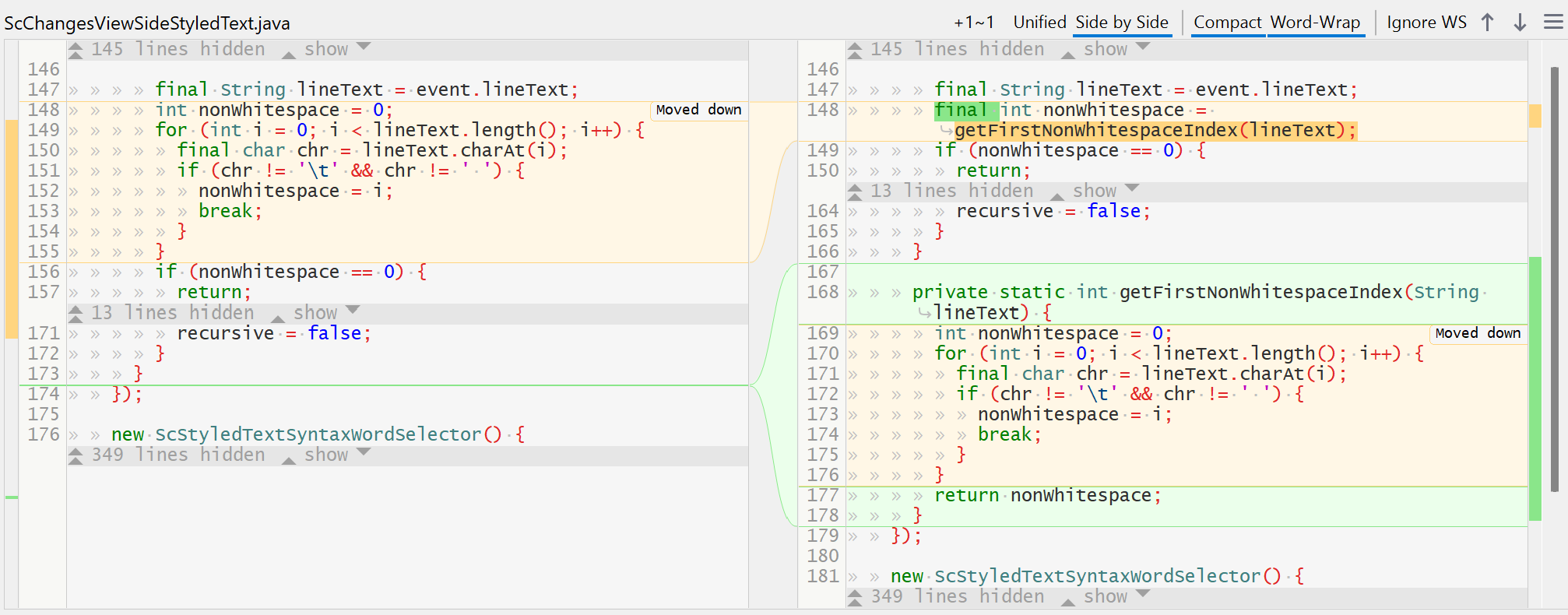
SmartGit’s Changes view provides in-file move detection for code or text. It recognizes not only complete blocks, but also moved fragments inside larger modified, added, or removed blocks – even when code is reordered, split, extracted, inlined, or partly edited. It links the original and new locations, preserving inline changes so reviewers can see what moved and what changed.
Move detection is enabled by default through the persistent Detect Moves view option (from the Hamburger menu). Moved ranges receive dedicated highlighting in side-by-side and unified views. Detection runs progressively in the background after the ordinary diff, so the diff appears quickly while move matches are refined.
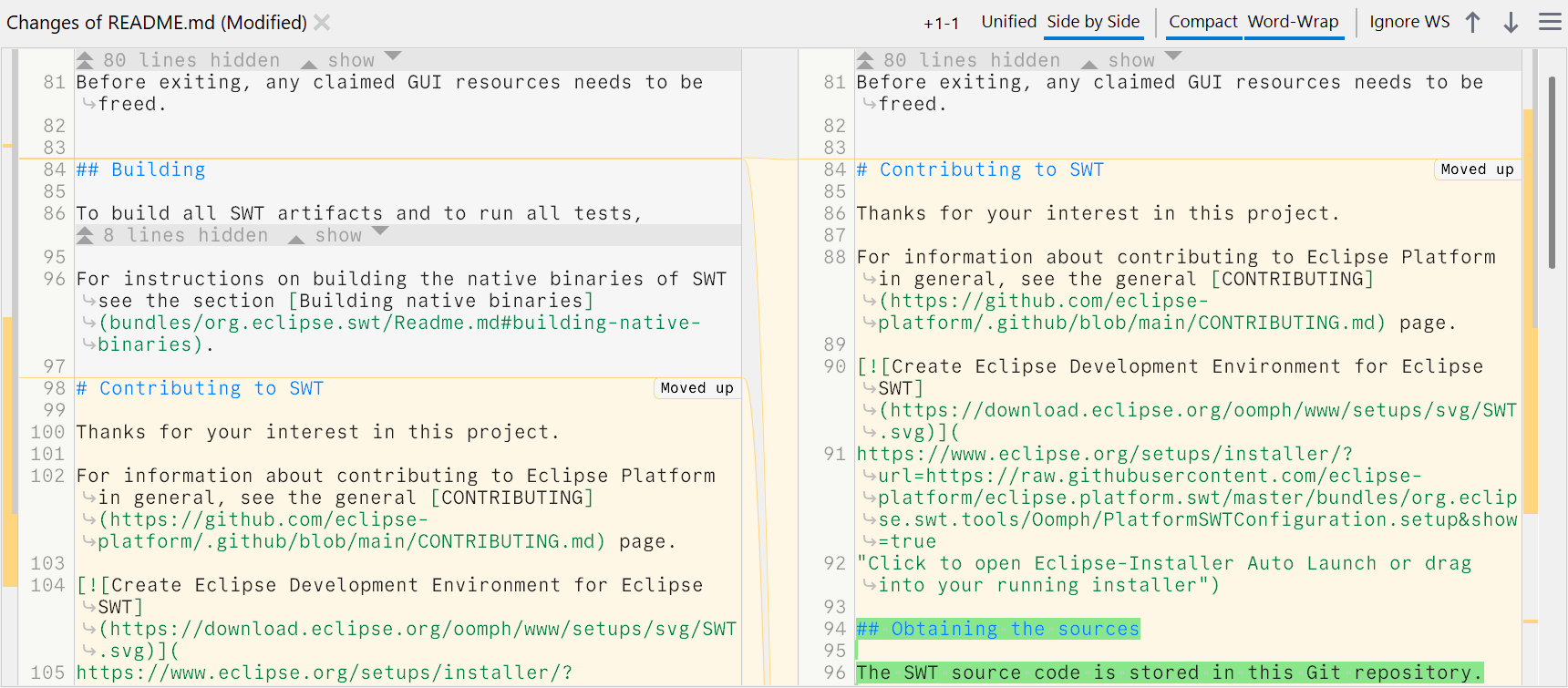
Long lines are now easier to read in the Changes view: Word-Wrap wraps them to the available pane width and is available from the toolbar in both unified and side-by-side layouts. Its state is remembered.
In side-by-side view, continuation lines retain the original indentation and are marked with wrap arrows. This behavior can be disabled with the low-level property changesView.wordWrap.indentWrappedLines.
Agent Integration
Start agents from the Git context you are reviewing
Start an agent from the Git context you are already reviewing. From a selected commit, ref, or history selection in Graph or History, run Codex or Claude with the relevant branch and commit context included automatically.
In the recommended managed-worktree setup, SmartGit gives each conversation its own agent/... branch and dedicated worktree. Your checked-out feature branch, index, and files stay untouched while agents work in the background, so several tasks can proceed at once.
When a result is ready, it remains an ordinary Git branch with ordinary commits. Inspect the diff and history, then cherry-pick only the commits you trust into your feature branch. The other agent sessions can continue or wait for review; integration is always your decision.
Observe and steer from the Agent view
The Agent view makes autonomous work visible instead of turning it into a fire-and-forget hand-off. A session list keeps running, completed, failed, and unread conversations together with their provider, prompt, branch, and model information.
Follow structured live output, including the prompt, launch parameters, work state, tool activity, commands, file changes, and the agent’s final result. Expand or collapse sections, wrap long lines, resize the editor and output panes, and follow commit links back into the Log.
The same conversation provides Start, Stop, Steer, and Resume controls. Send a correction while Codex or Claude is active, stop a run while retaining its result, or reopen the native session later and continue from where it left off. Choose a model preset or tune the model settings for a new run or follow-up; SmartGit also remembers prompt and steering history.
Fold difficult Git surgery into focused fixups
Give an agent a well-defined Git task that would be tedious by hand. A particularly useful example is folding a temporary commit into the appropriate earlier feature commits: select the commit, describe the outcome, and let the agent prepare focused fixups on its isolated branch. This is one possible workflow—not a built-in one-click command.
SmartGit keeps the result reviewable. The agent preserves recovery information, validates the rewrite, and reports its decisions. Review the ordinary commits and compare the final content with the original tip. If it looks right, move your feature branch to the reviewed result and perform any squash cleanup yourself.
Agent results remain Git results. SmartGit keeps the context, isolation, visibility, review, and final integration under your control.
SmartLinks
SmartLinks let you share a link to the exact commit you’re viewing, so others can open the same context in SmartGit or on the web and join the conversation.
When pasting a SmartLink in SmartGit, it will jump right to the commit, fetching (or cloning) first if necessary.
You’re in control of what you share:
Choose between maximum convenience, making the link truly portable, so others can clone the repository if they don’t have it already.
Or stay fully private with no sensitive information included in the link, making it safe to share everywhere, to anyone.
Drag and Drop in the Standard Window
Managing your branches in the Standard window just got more intuitive.
Drag and drop branches between the Graph and the branches list. While dragging, hover over a branch to reveal it in the Graph.
Commit without Staging improved
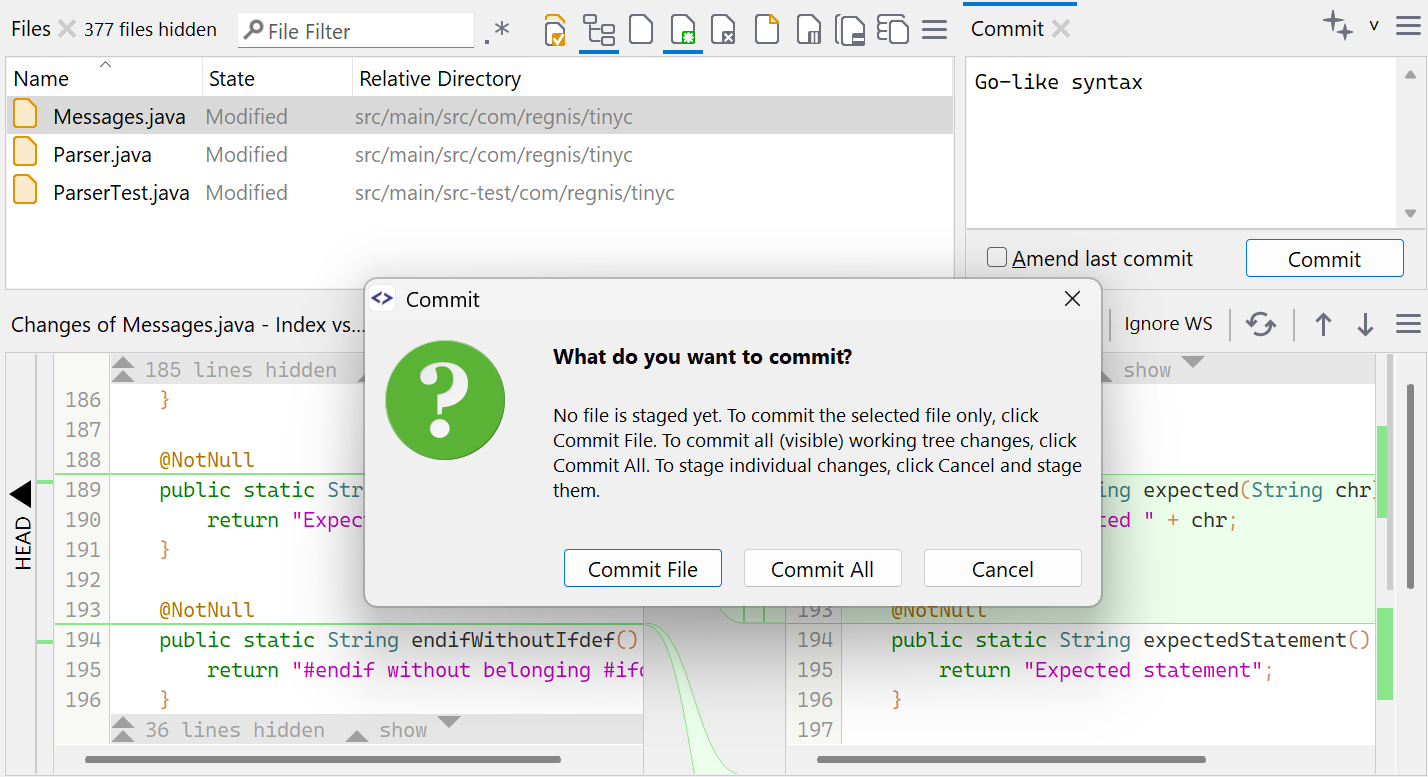
Committing without staging becomes even easier: When committing a single selected file out of multiple changed files, SmartGit asks whether to commit the selected single file or all (visible) files.
For multiple selected, changed files SmartGit will commit them without asking.
Standard window: Commit details with Branch and Tag information
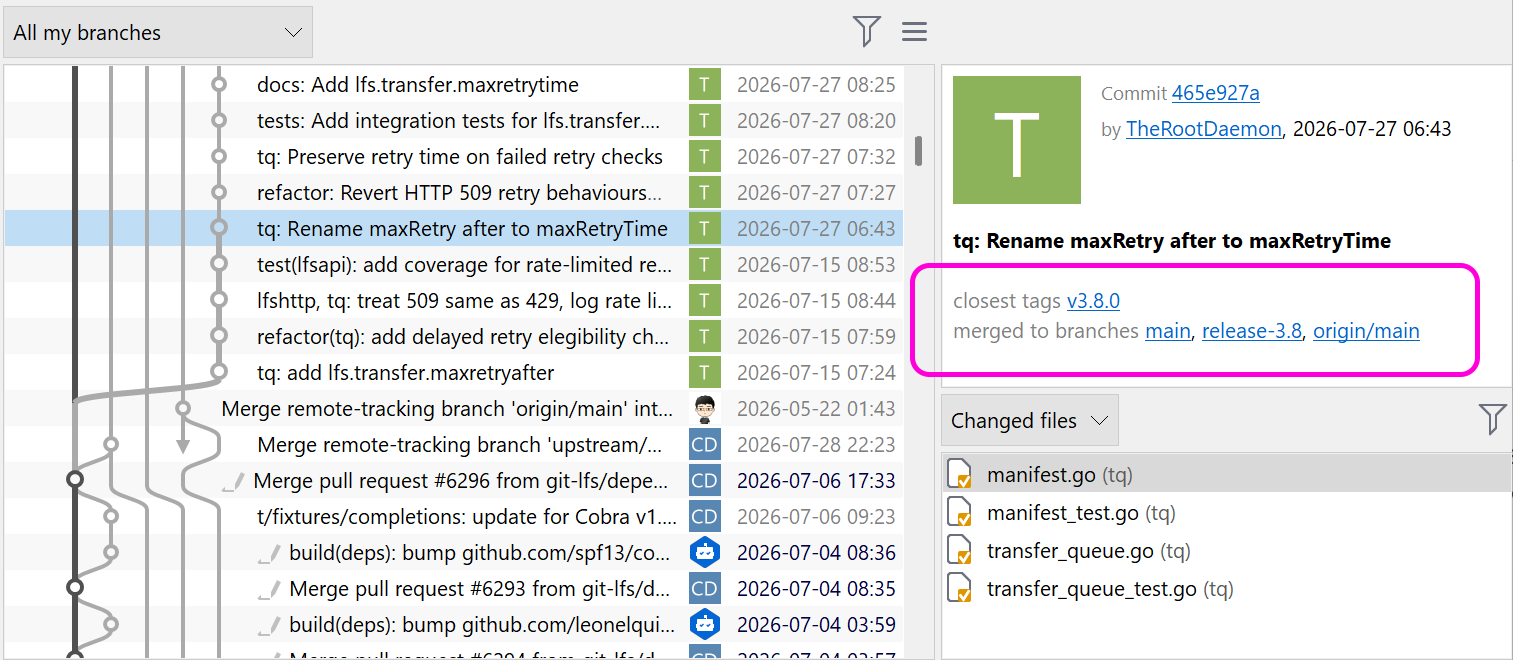
When selecting a commit in the Log graph of the Standard window, you can see details about
- which branches contain this commit (first parent ancestor),
- to which branches it already was merged (other parent ancestor) or
- which is the closest tag pointing to this file state.
Graph: more Intuitive Commit Reordering
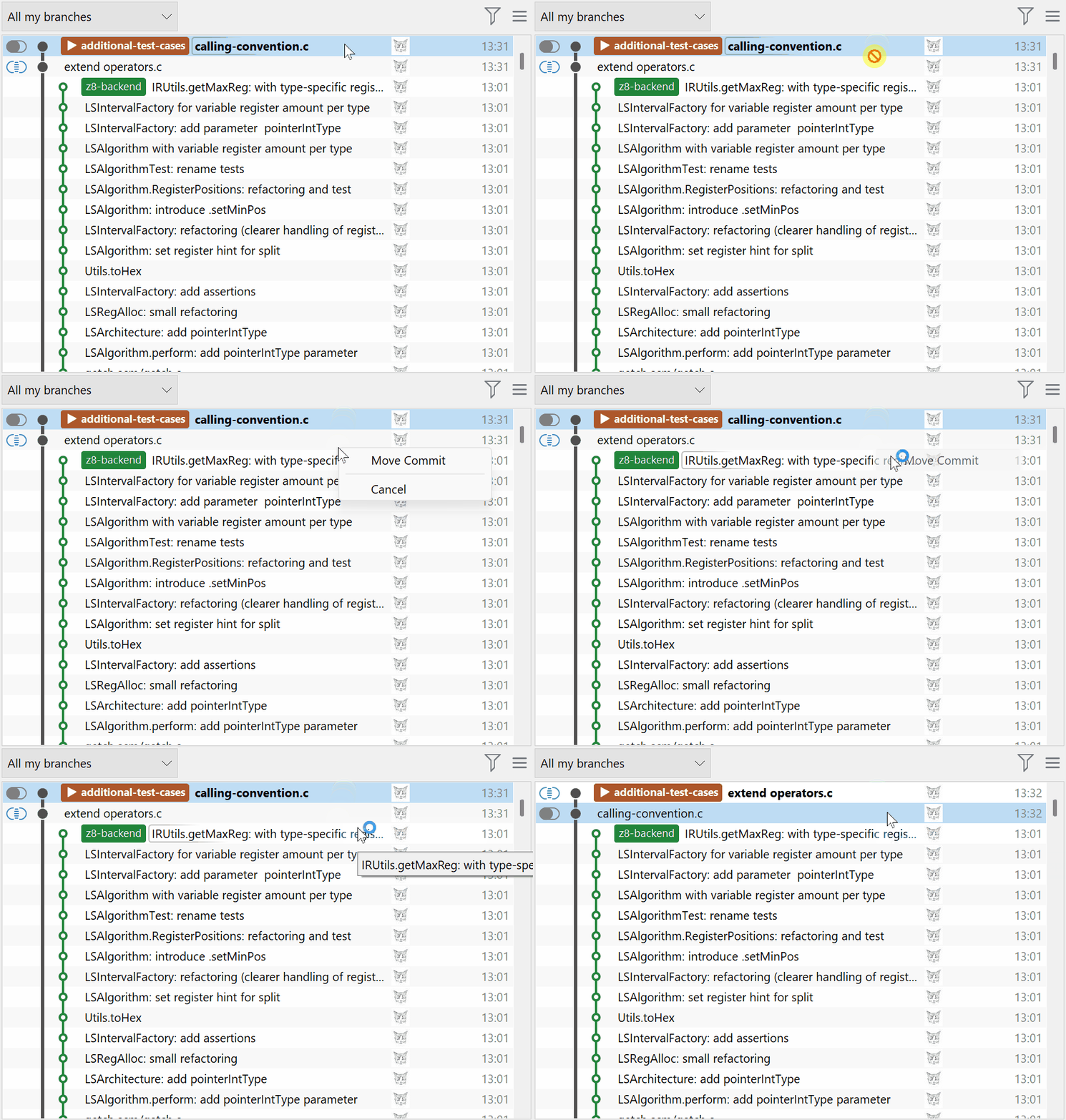
Reordering commits becomes even easier in SmartGit.
Even if commits from another branch show up beside the current branch commits, they can be reordered easily.